PROBLEM
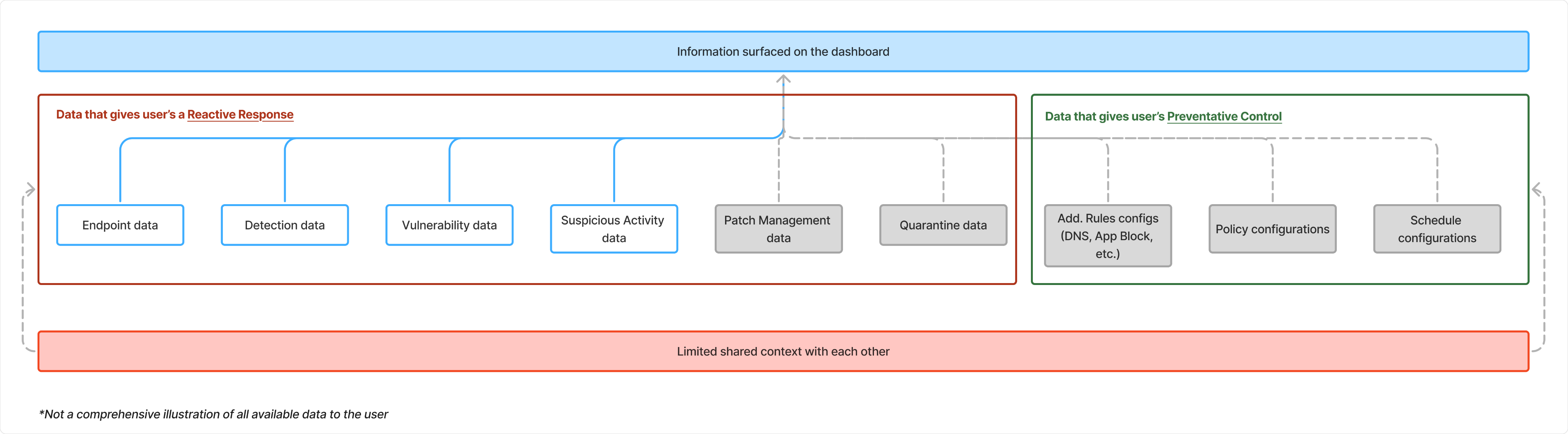
With signals scattered across the product, admins missed critical risks and spent time on less impactful actions.
Business
Disconnected capabilities weakened product clarity, slowed customer value, and directly threatened adoption, retention, and upsell.
Lack of understanding security state
Users had no simple way to understand their overall security state, leaving them unsure of their true risk or where to focus their attention.
Inefficient workflows
Admins spend more time navigating the product than resolving threats.
Ineffective decision making
Without context or visibility to what makes more impact, customers struggled to make decisions that returned the most effect.
SOLUTION to first user problem
Giving the full picture and confident awareness
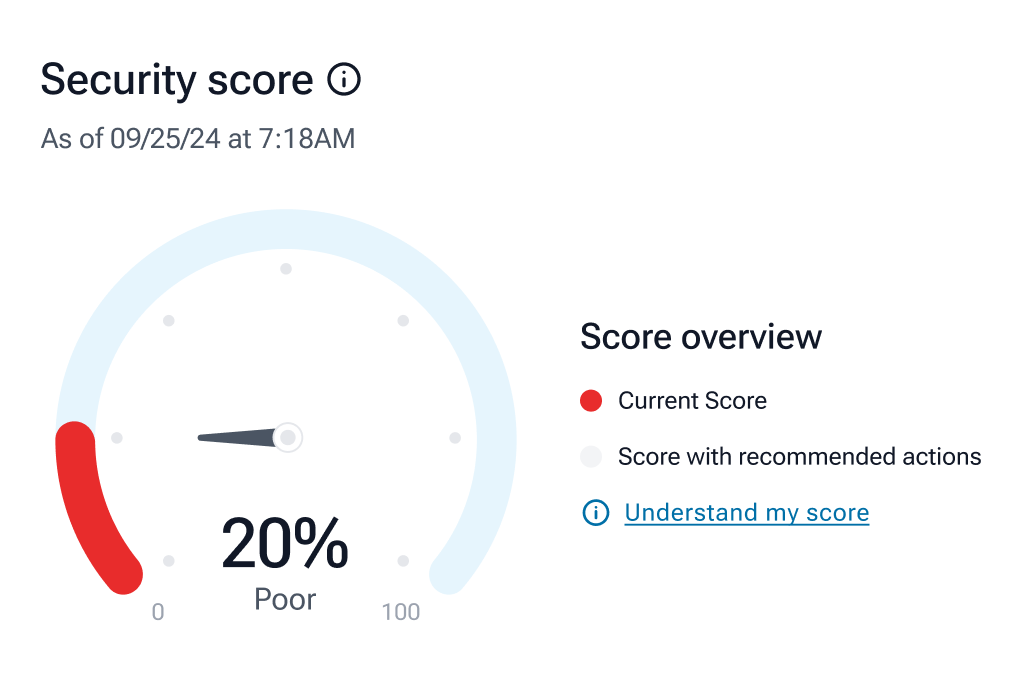
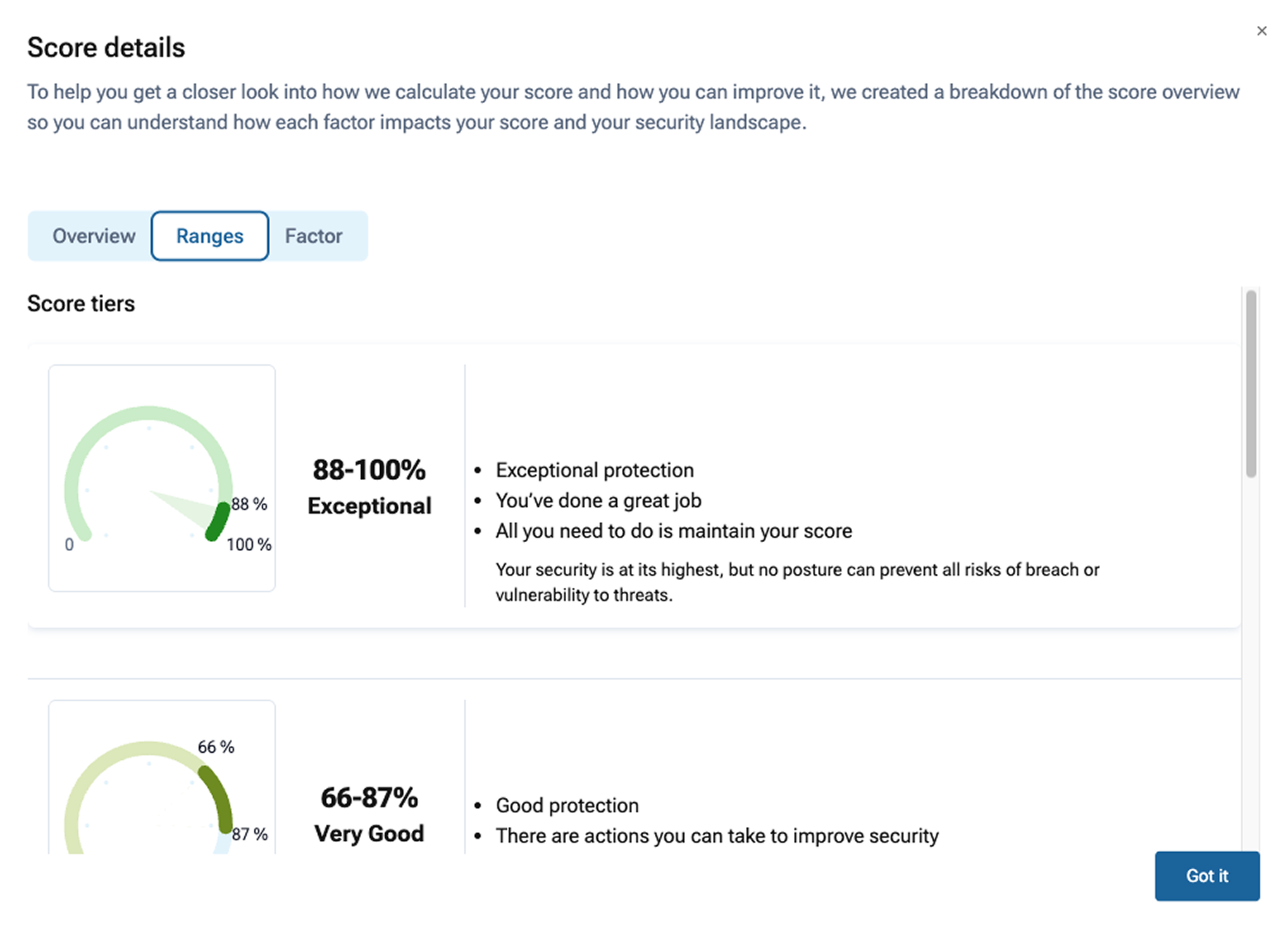
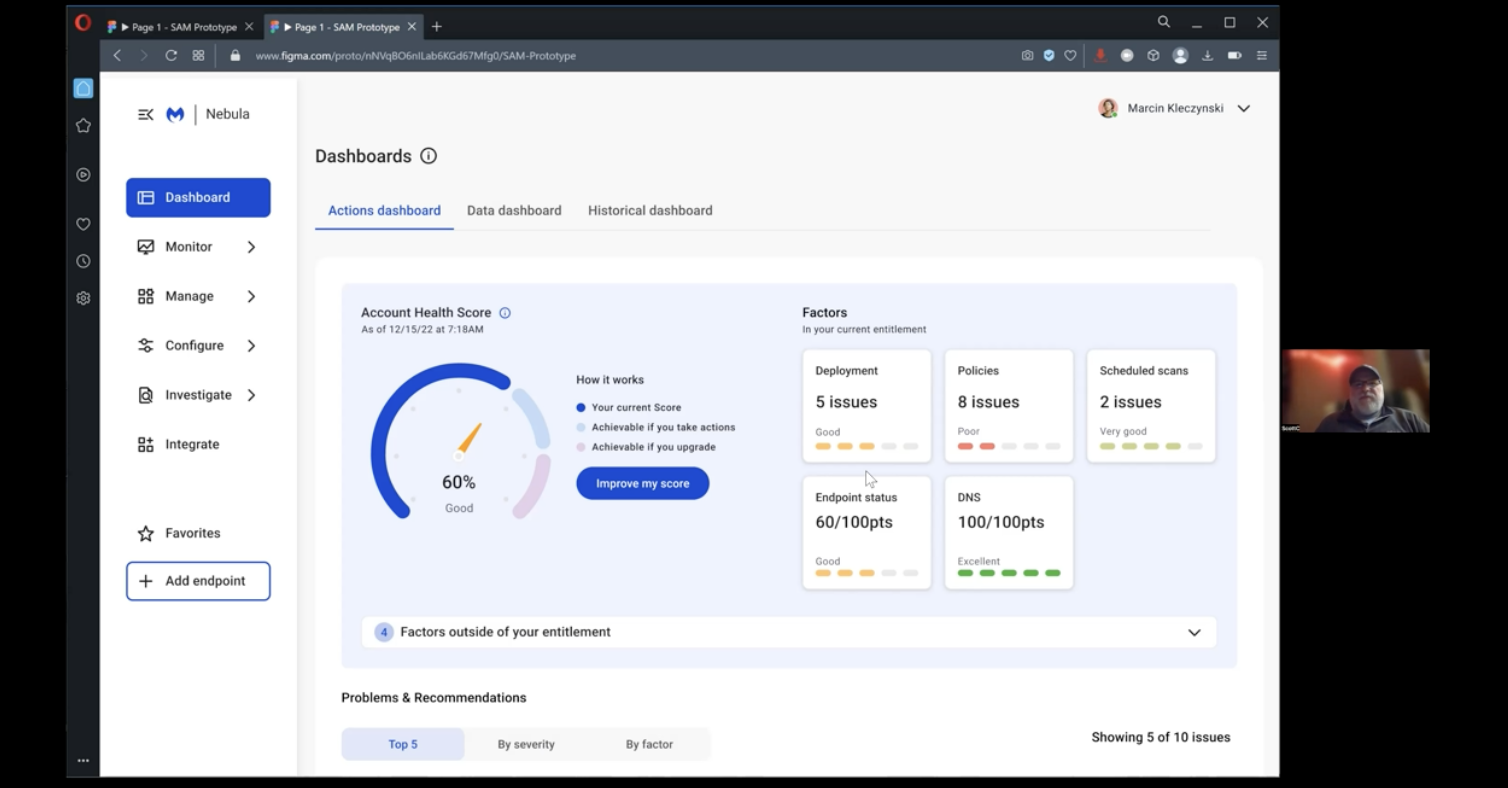
I, along with my team, solved the user’s lack of understanding of their security state by transforming a CEO’s score concept request into a comprehensive posture and guidance system that makes security simple, visible, and actionable.
SOLUTION to second user problem
Less navigation and more action
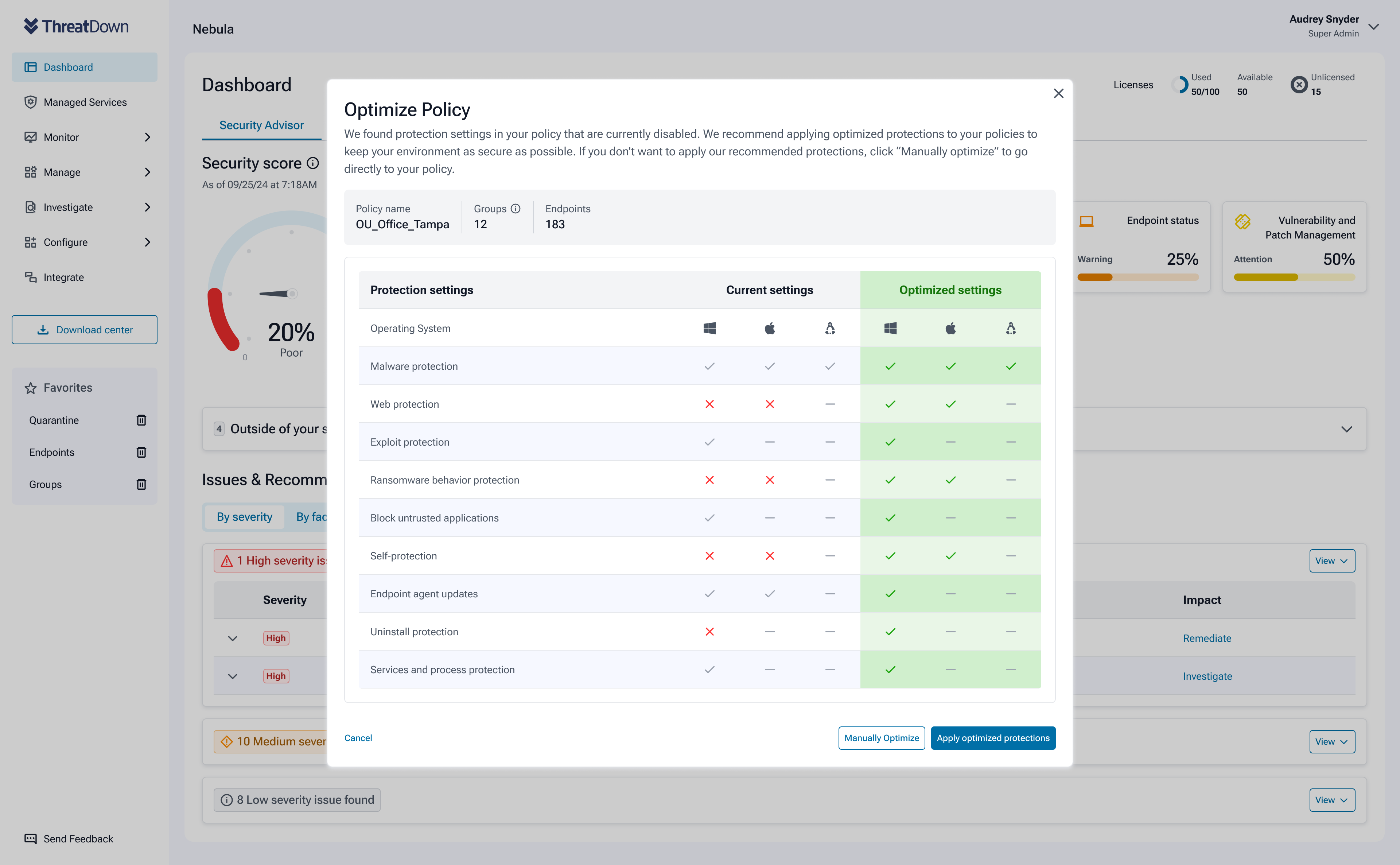
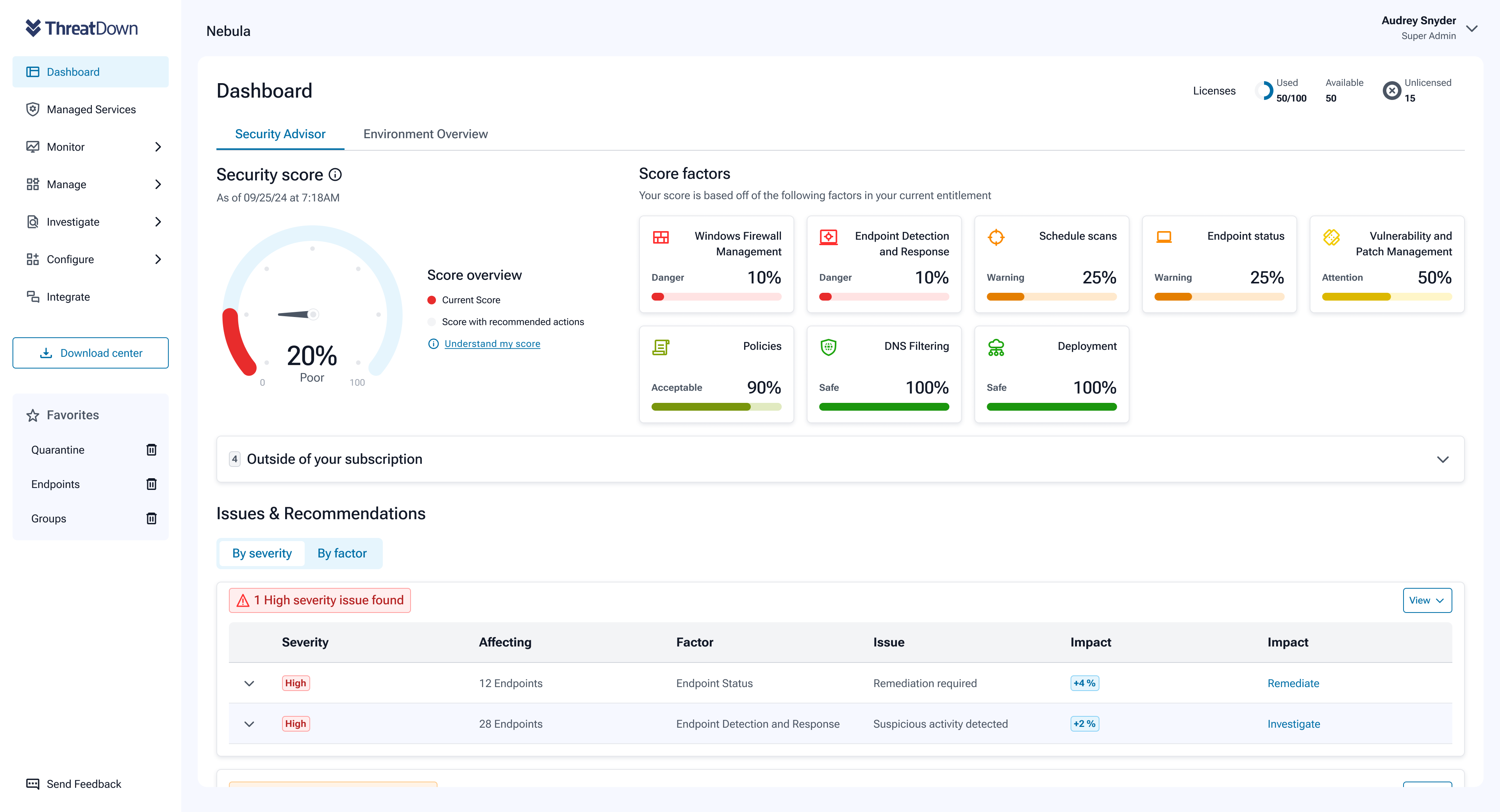
I solved for inefficient workflows by categorizing the dispersed workflows of different product areas into factors of the scoring model surfaced on the dashboard
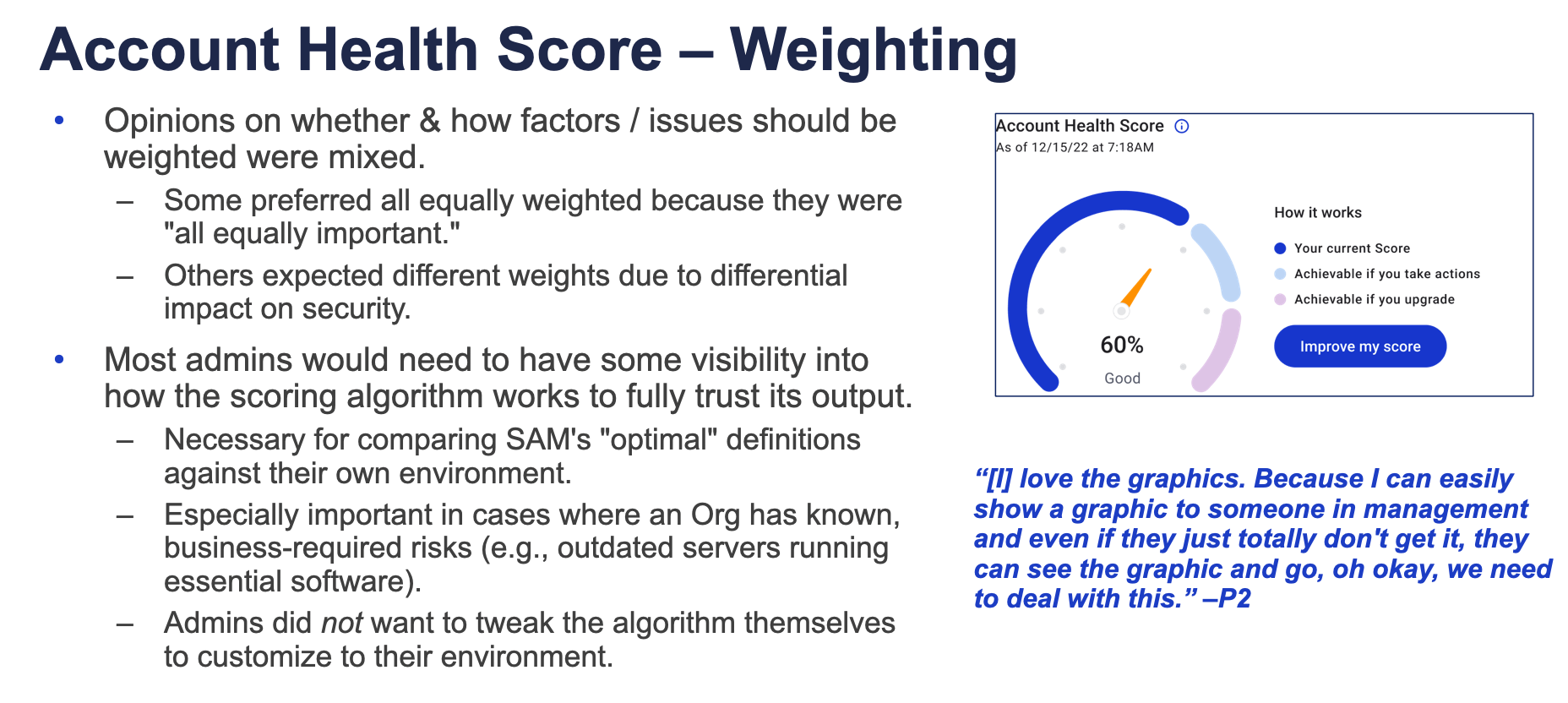
Research showed that in order for users to trust the score, every issue and recommendation needed to be clearly mapped to it. Without that connection, the score would appear ambiguous and lack credibility.
SOLUTION to third user problem
Designing for effectiveness by prioritizing severity and impact
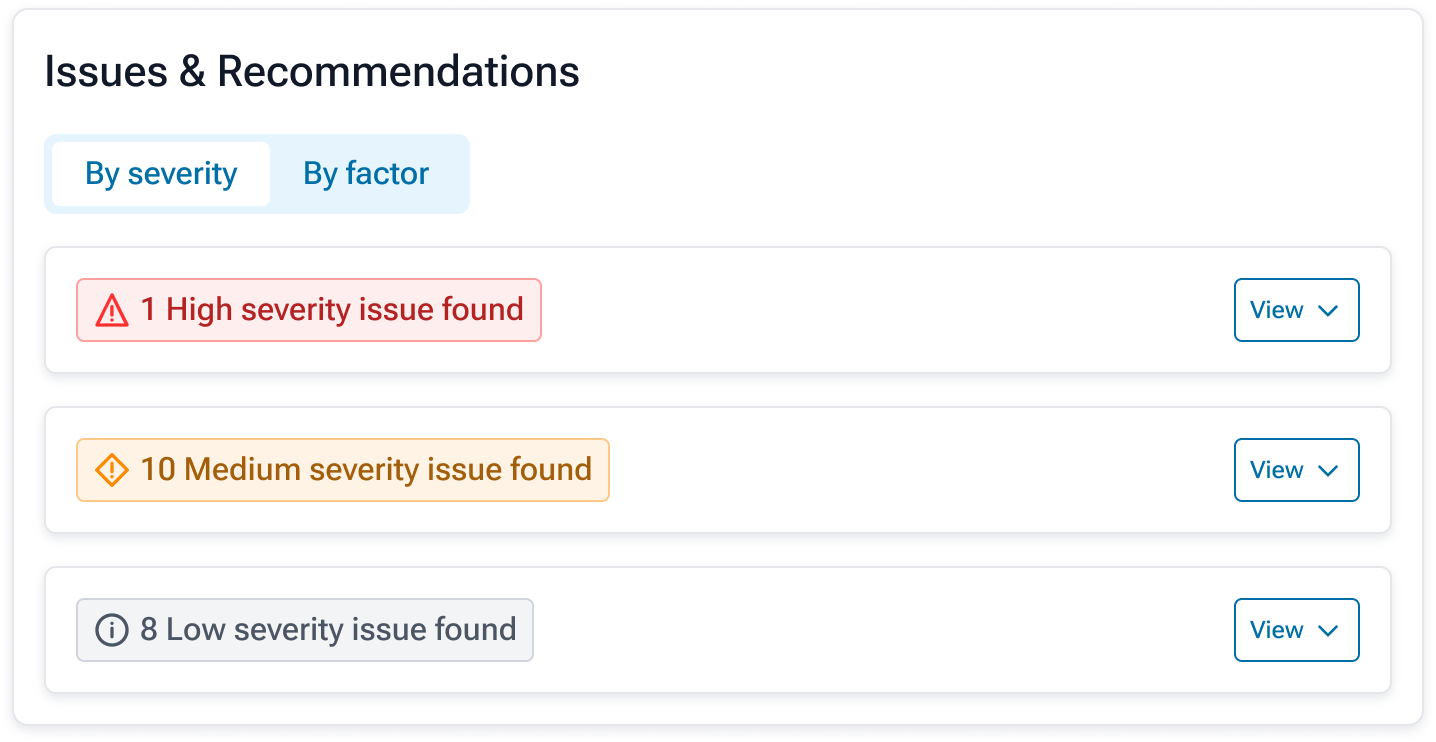
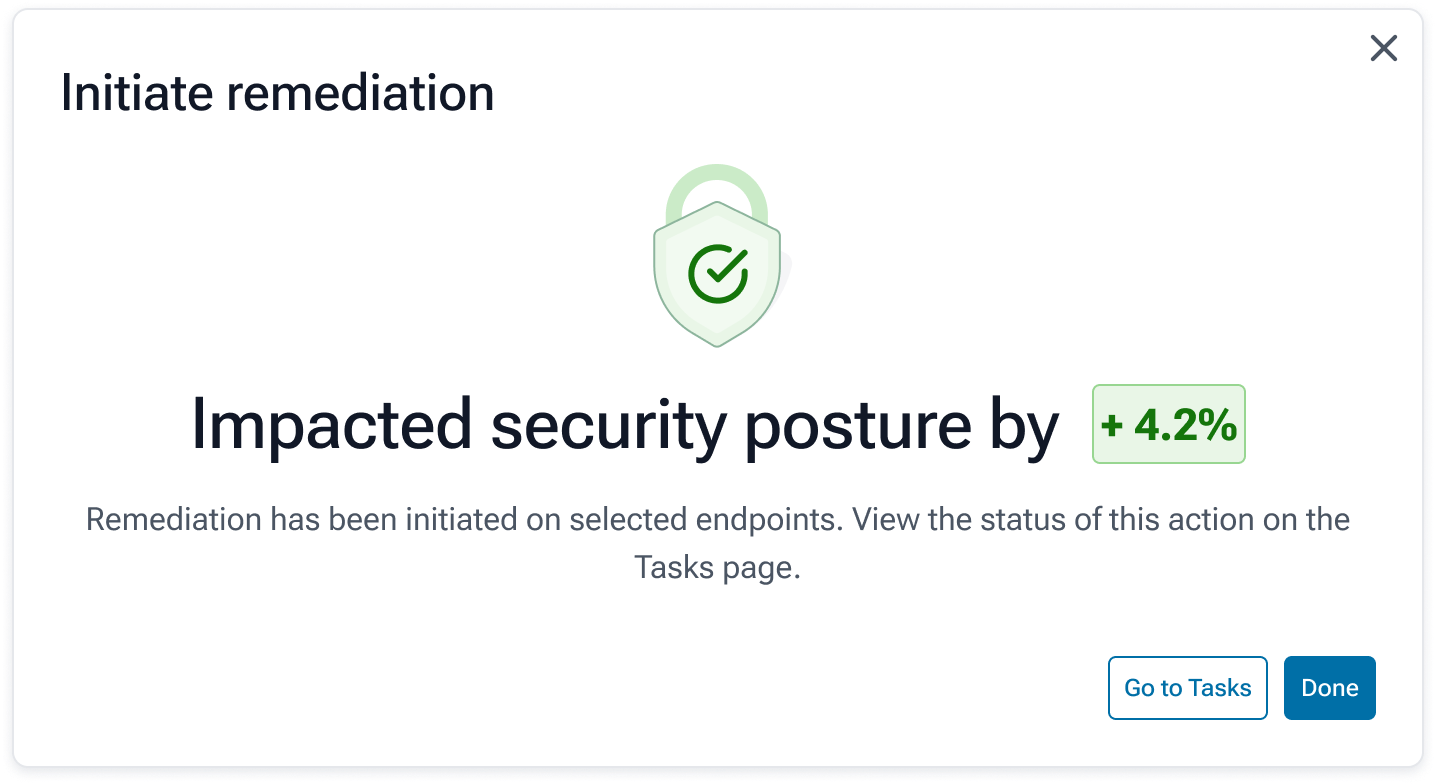
I solved for ineffective decision-making by giving customers the context and visibility of severity and impact which was needed to understand which actions returned the most security score improvement.
Research validated that severity of the issue and impact to the score were priority for customers to trust and adopt the Security Advisor.
Because of this, I advocated severity as a variable to be factored into the scoring model and led with it as the default grouping of issues and recommendations.
OUTCOME
A centralized, easy-to-understand security dashboard that makes security posture obvious and action straightforward with guidance.
Biggest impacts
12%
Increase in Security Score within 6 months of launching
7%
Increase in deployment rates within 6 months of launching
Additional impact
Financial
- Revenue expansion (Upsell + Cros-ssell)
- Converted abstract risk into monetizable gaps
- Retention & churn reduction
- Shifted the perception of value from reactive protection to continuous protection.
- Reduced Support costs
- Providing guided recommendations resulted in fewer support tickets
Operational
- Sales ops
- Renewal risks become visible earlier and more reliably with objective posture drift, not subjective opinion.
- Problem framing with prospects becomes consistent
Opportunity
- Foundation for AI-driven security guidance
- Advisor logic created the framework for AI explainability, potential forecasting, automated remediation and predictive risk monitoring.
- Data & insights
- Normalized posture data across environments enabling future benchmarking for internal use and customer recommendation use.
PROCESS DEPTH → Research
Research contribution
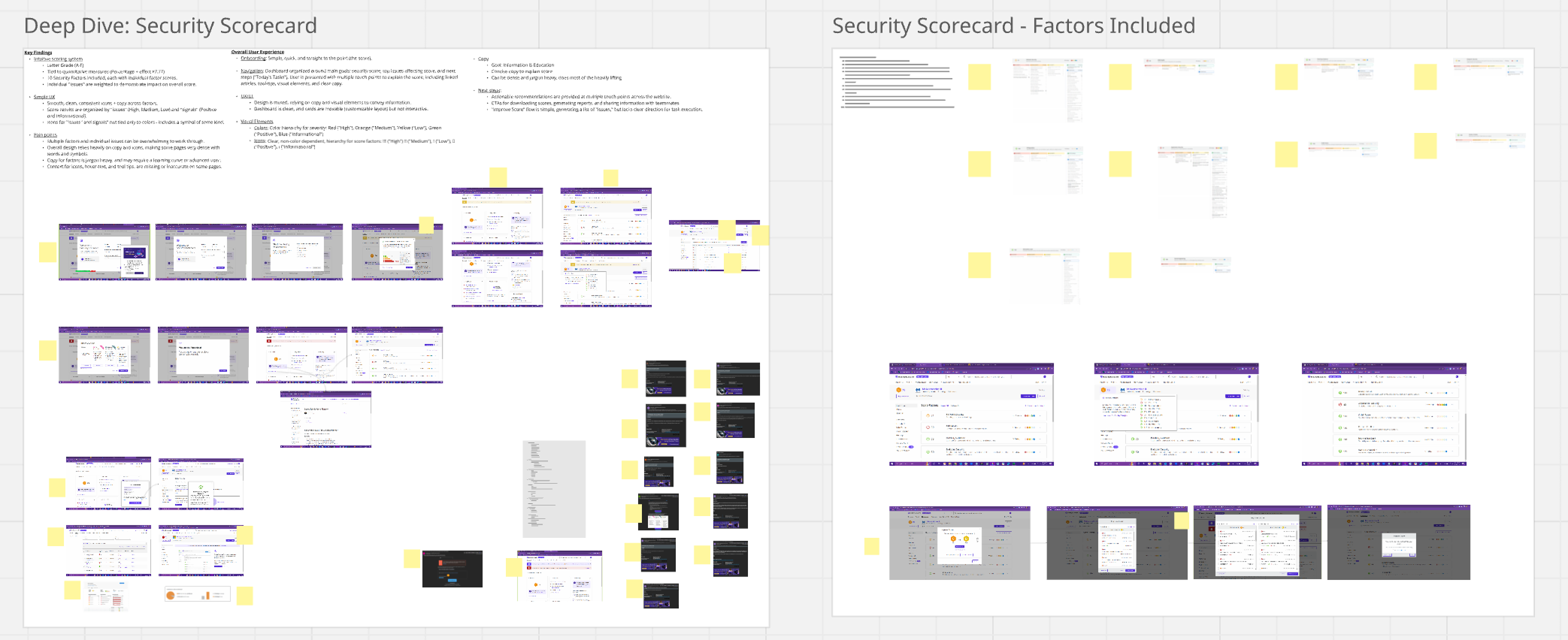
Competitor Analysis
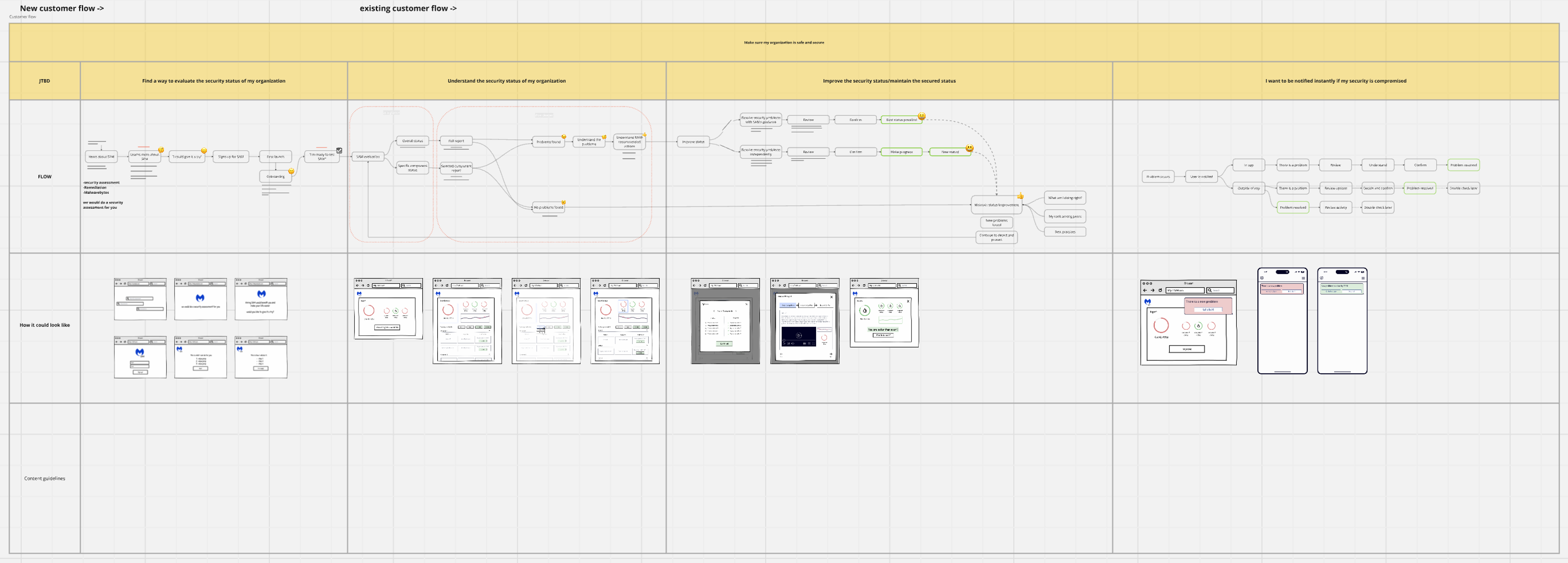
Low Fidelity Flows
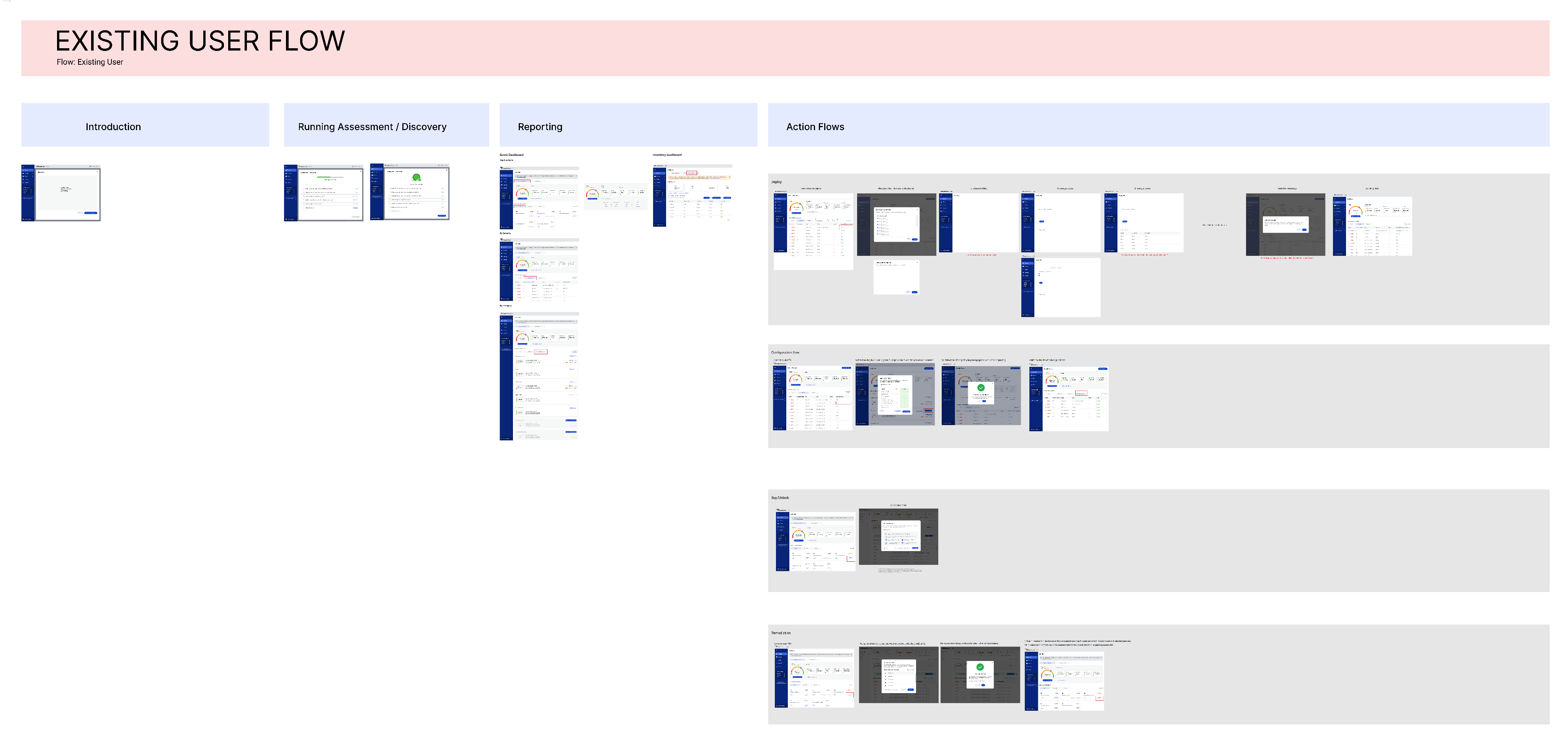
Higher Fidelity Flows
Stakeholder interviews
I met with executive and IT stakeholders to review the problem and gather their perspective.
Competitor analysis + Concept exploration flows
I explored competitors and other products with a similar scoring concept and ideated primary use cases for user and business.
Cybersecurity industry
- Microsoft Defender (In production risk score)
- Security Scorecard (One-time assessment score)
Related scoring concepts
- FICO (Credit score)
- Academics (Grade score)
PROCESS DEPTH → Research
Research contribution
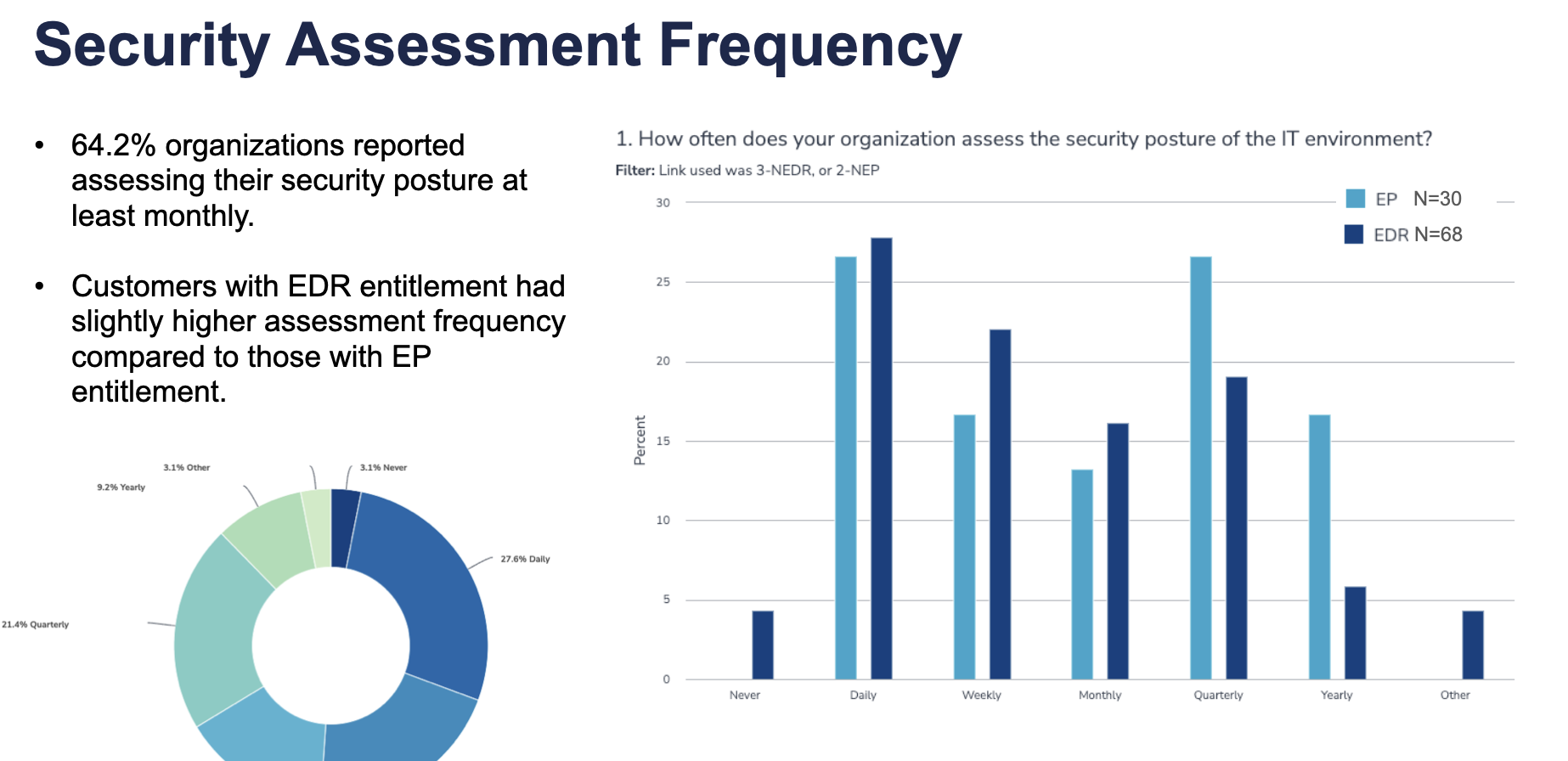
User interviews + Concept validation
I built a low-fidelity prototype of the core flow and partnered with our researcher to run seven usability sessions, where I observed and captured key insights.
Result
The results of the concept testing confirmed that a Security Score paired with actionable recommendations was the right direction.
The challenge then became designing a scoring model robust enough to represent an IT admin’s entire environment, yet simple and intuitive enough to match their mental model, build trust, and drive action.
PROCESS DEPTH → Design
Scalable + intuitive designs for a complex algorithm
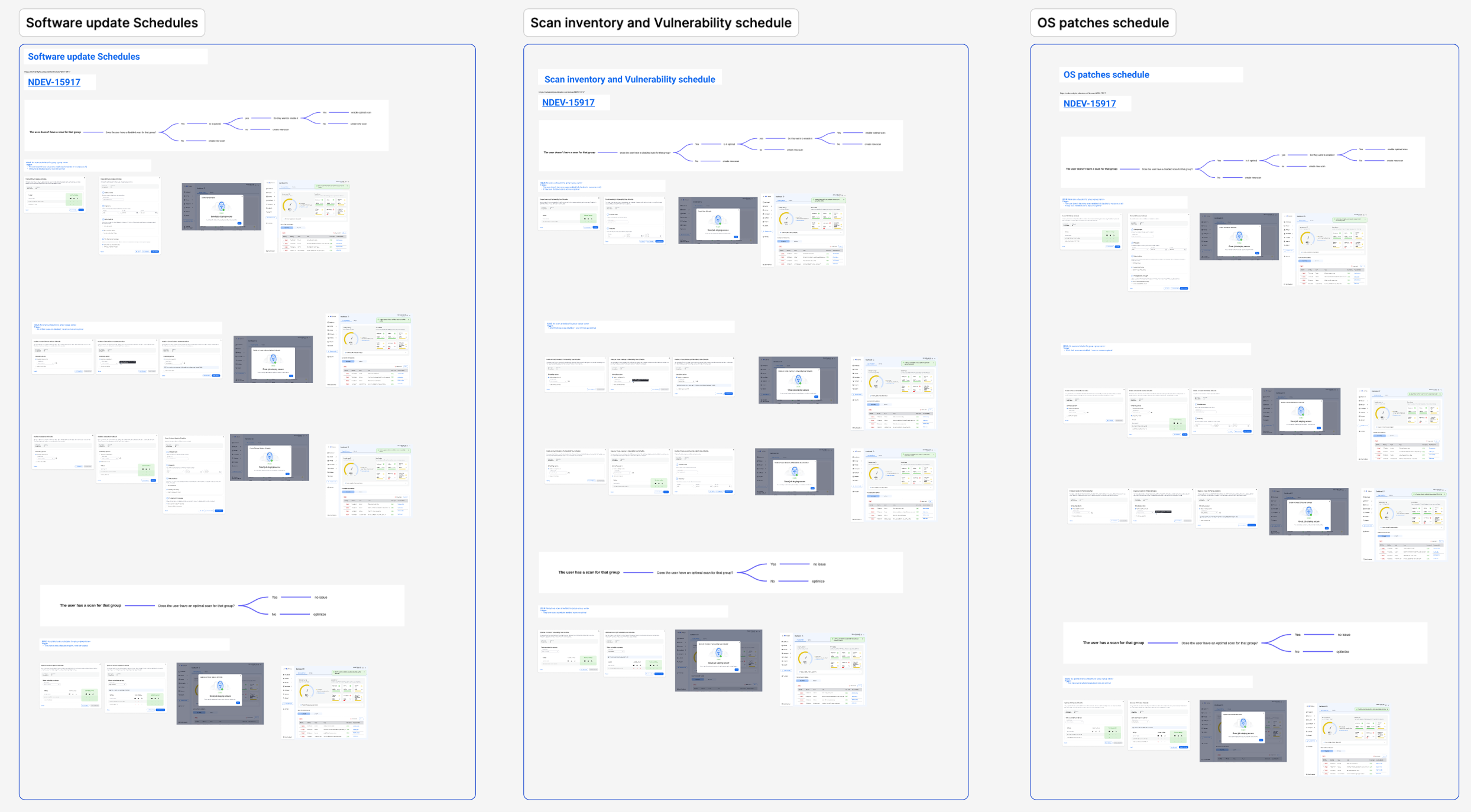
With concepts validated and stakeholders aligned we had now reached a level of clarity to begin designing each of the security advisor recommendation flows.
1 Environment score
Along with PM and Engineering, I took an active role in defining the scoring framework itself not only the UI. I led workshops with internal stakeholders and IT SMEs to uncover expectations around what makes the scoring model effective.
8 Scoring factors
At-a-glance understanding of the security environment with more detail that connected the overall score to the individual issues and recommendations.
30+ Guided action flows
User flows that strengthened security posture.
PROCESS DEPTH → Scoping
Necessary compromises to achieve speed to market and MVP
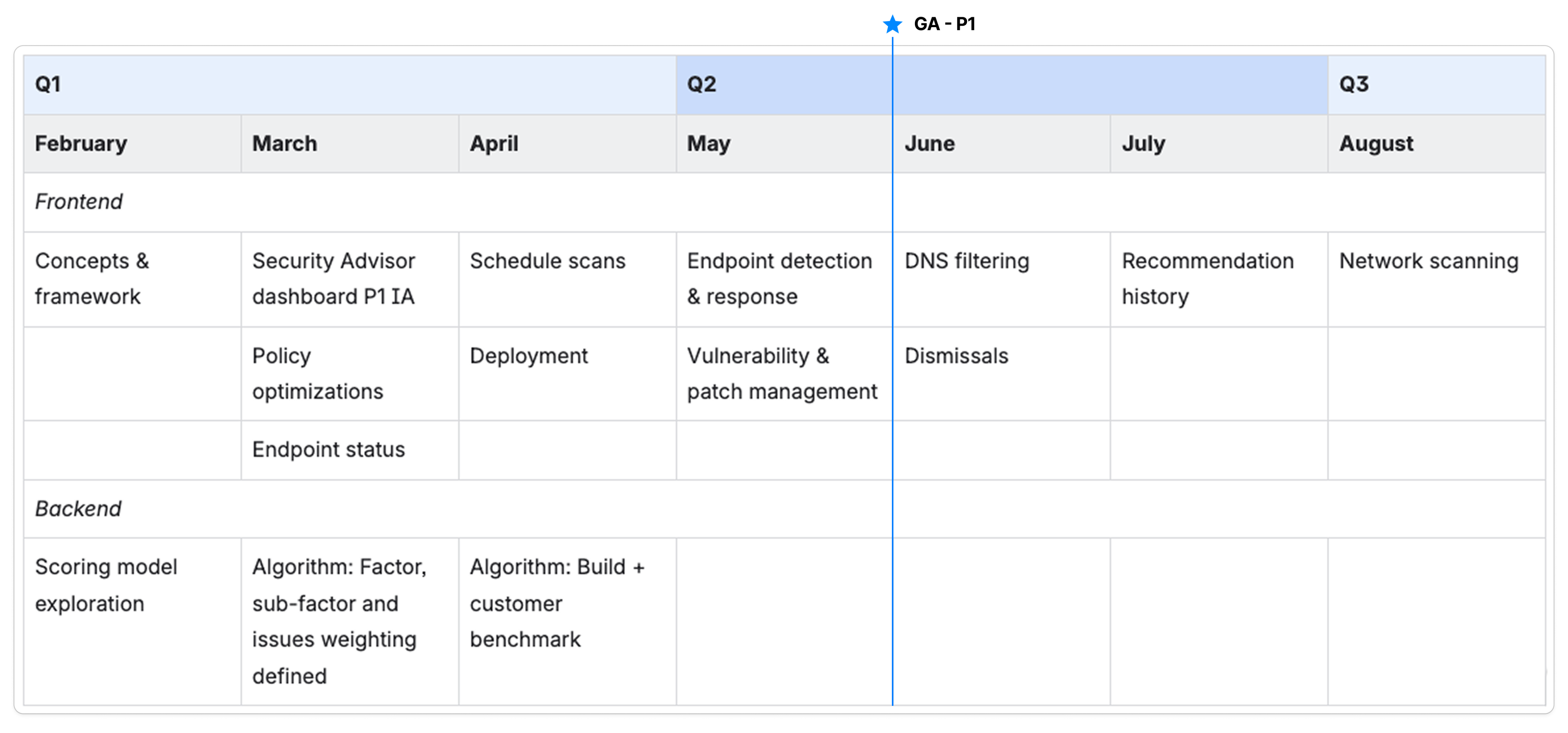
I negotiated with PM, Dev and CEO to align on the acceptable timelines for GA.
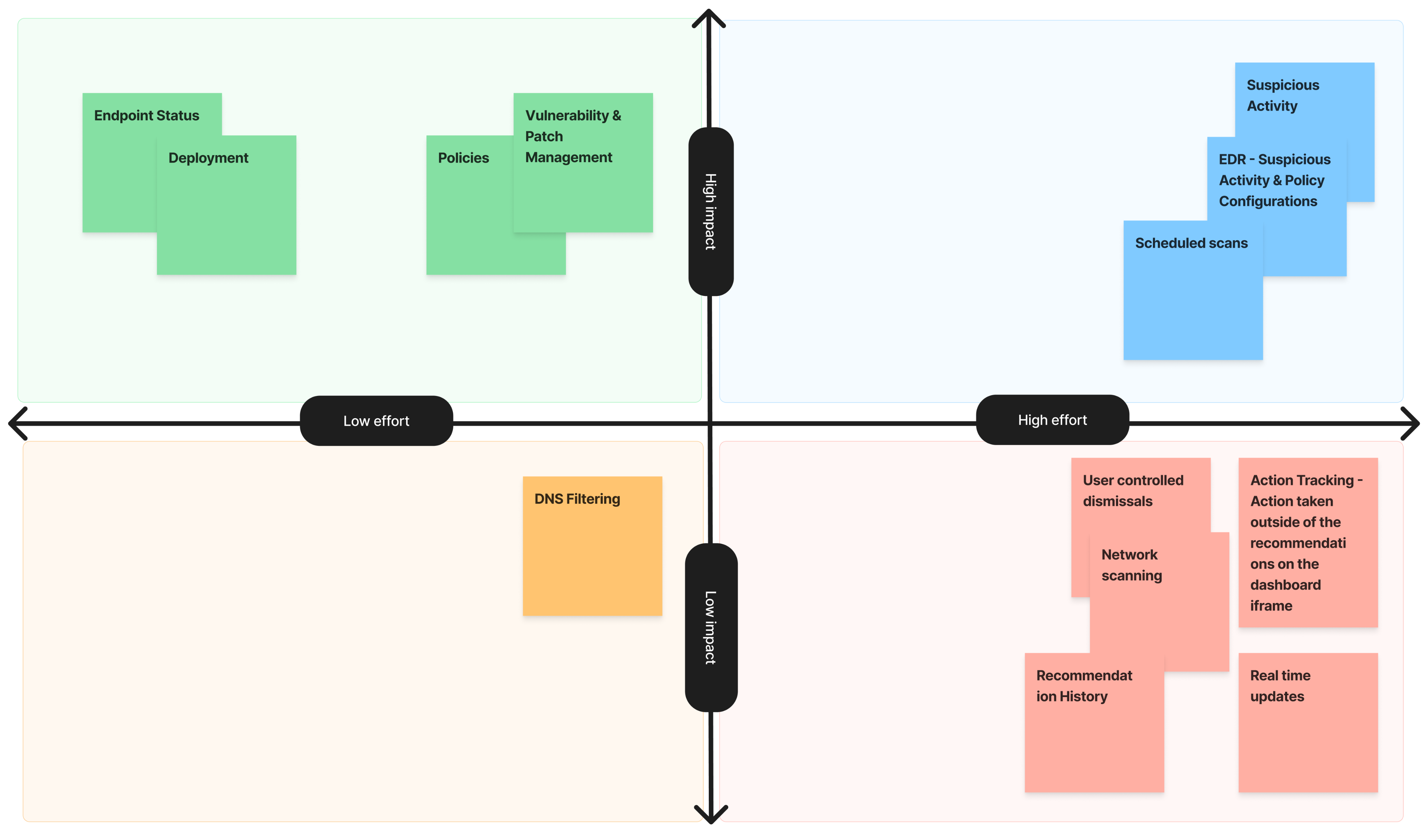
With broad product impact and competing priorities, I aligned with PM and Engineering to define a focused MVP by evaluating scope with user value, business impact, and technical feasibility.
PROCESS DEPTH → Post Release
Track and Iterate
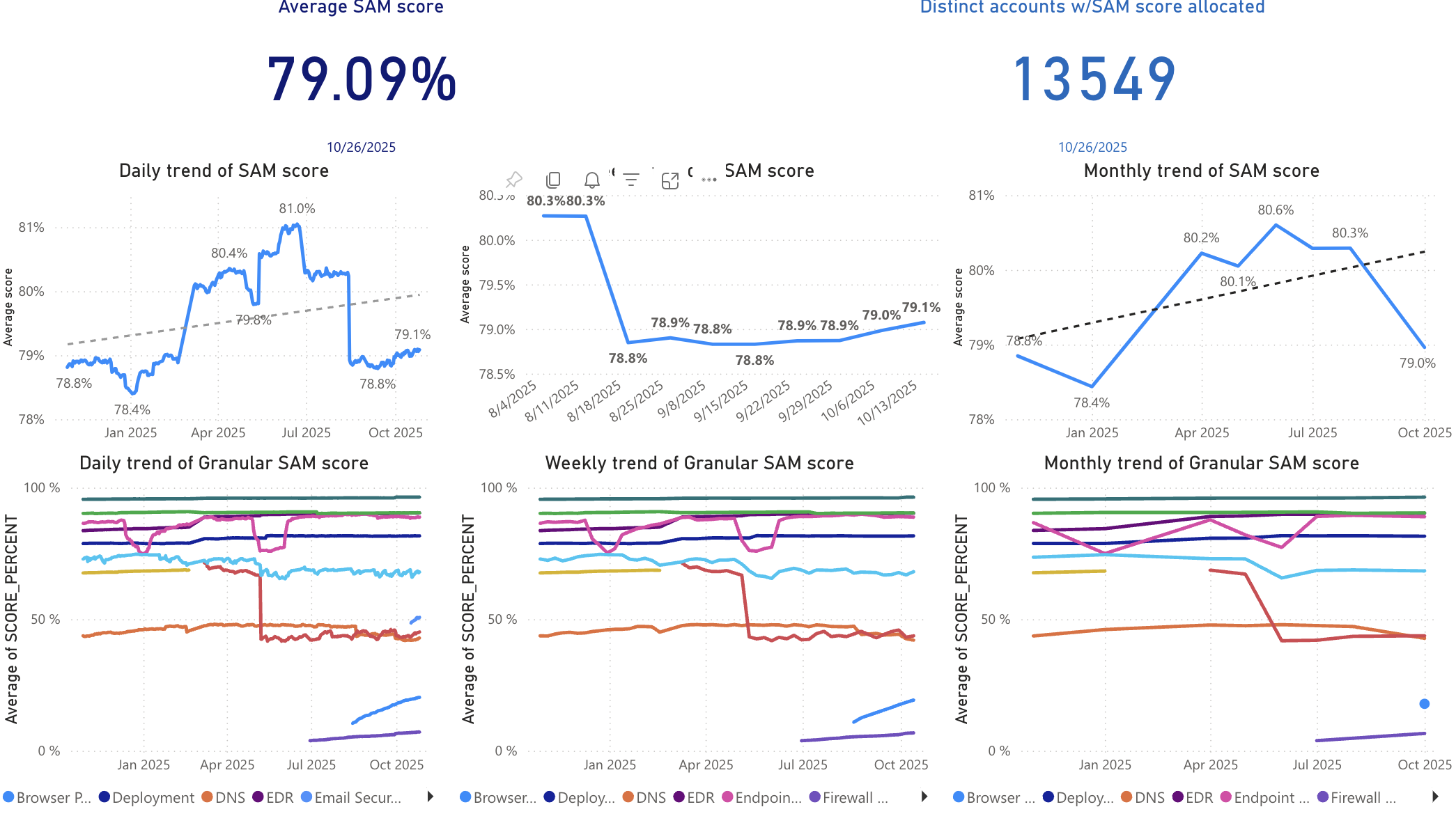
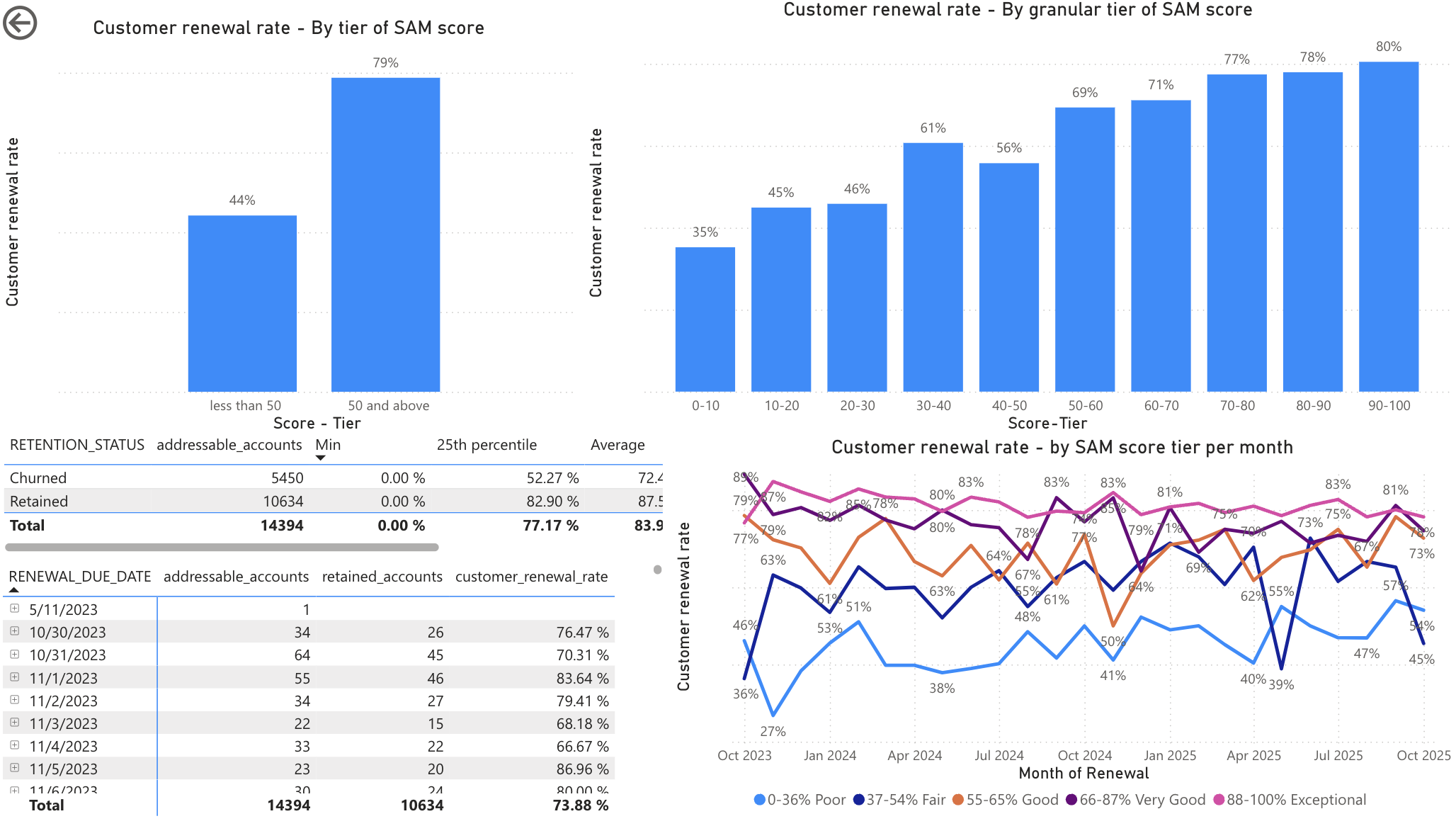
As our platform evolved, the test of my design framework’s scalability had passed as at least 3 new factors have been added to the experience since it’s release.
I continued to monitor metrics including overall average scoring, individual factor usage and adoption, task flow success and more.
I took an active role in collaborating with the Product team to continue scoping previously deferred experience into our roadmap so that we could deliver the full vision of the Security Advisor experience.
RECAP
Project impact
Biggest impacts
12%
Increase in Security Score within 6 months of launching
7%
Increase in deployment rates within 6 months of launching
Additional impact
Financial
- Revenue expansion (Upsell + Cros-ssell)
- Converted abstract risk into monetizable gaps
- Retention & churn reduction
- Shifted the perception of value from reactive protection to continuous protection.
- Reduced Support costs
- Providing guided recommendations resulted in fewer support tickets
Operational
- Sales ops
- Renewal risks become visible earlier and more reliably with objective posture drift, not subjective opinion.
- Problem framing with prospects becomes consistent
Opportunity
- Foundation for AI-driven security guidance
- Advisor logic created the framework for AI explainability, potential forecasting, automated remediation and predictive risk monitoring.
- Data & insights
- Normalized posture data across environments enabling future benchmarking for internal use and customer recommendation use.